Journals
Voice of the Editor
Professor Kim E. Barrett, Editor-in-Chief of The Journal of Physiology
Professor Kim Barrett discusses wildfires, the potential health impacts of smoke exposure, and emphasises the importance of protecting research capacity.

Professor Kim E. Barrett
As I write these few lines for Physiology News from my office in Northern California, I am mindful that we are continuing a long stretch of sunny days that have brought high temperatures in the upper 80’s (Fahrenheit, around 30 degrees Celsius) despite the fact that “spring” has nominally only just begun and March is not yet over. In Southern California, where I travelled last week, the temperatures have been even higher, exceeding 100oF (>40oC) in some inland locations.
These unusual conditions seem likely to significantly impact the state’s water balance. While winter precipitation amounts were actually higher than average, and reservoirs are currently at record levels, the snowpack in our neighbouring Northern Sierra mountains has been decreasing since late February, when normally it would not be expected to peak until sometime in April.
The accelerated melting robs us of a “frozen reservoir” that normally stores additional water until later in the season. If high temperatures persist, and we cannot later rely on these additional flows, we can expect a much greater risk of wildfires as the summer progresses. Thus, not only will humans and animals potentially suffer from the combined impacts of extreme temperatures and exposure to excessive respiratory particulates, but the homeostasis of the whole ecosystem will be disturbed.
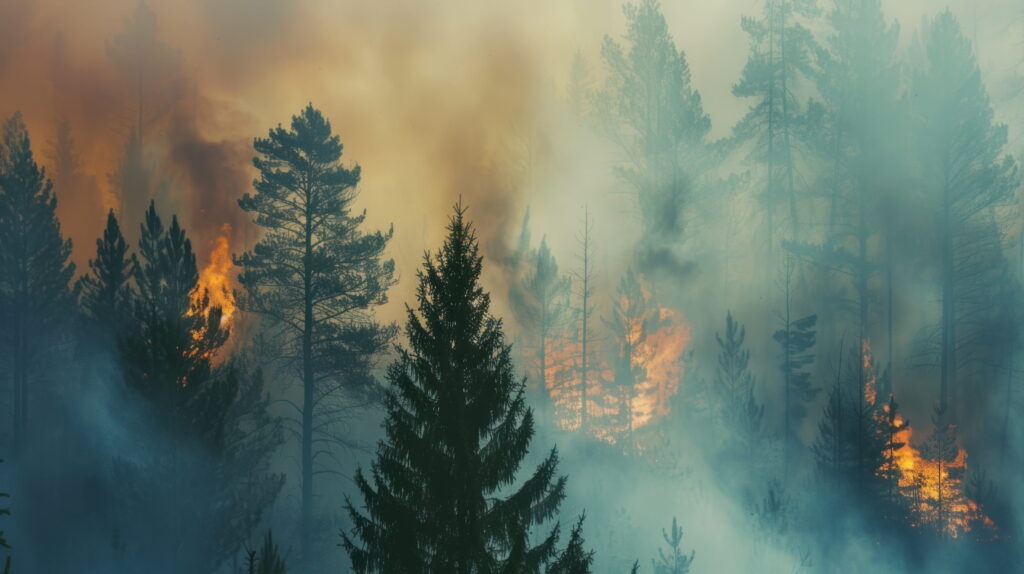
Wildfires
Wildfires have long been a fact of life in California and other western parts of the US, but they are increasingly occurring in surprising locations. For example, on a recent trip to present a seminar at the University of Nebraska Medical Center, I was astonished to learn that the state was in the grip of three wildfires, including the largest in the state’s history. Wildfires can be considered part of the natural order, and in fact have many beneficial effects. They clear dead and dying vegetation, release organic constituents back to the soil, control the number of pests, and trigger the reproduction of some fire-adapted species, including many coniferous trees that rely on fire to release their seeds from cones.
Indigenous peoples have used controlled fire as a tool to “heal the land” for millennia. But climate change is increasing the number and severity of wildfires, and the spread of human habitation into previously remote areas further increases our exposure to fires and their products. Even low levels of smoke inhalation, and particularly that generated from the burning of man-made structures at the wildland-urban interface, can exert marked effects on a number of physiological systems.
Exposure to wildfire smoke and its potential health impacts
My colleagues at the Environmental Health Sciences Center at UC Davis have undertaken several large studies to understand the health sequelae of exposure to wildfire smoke. Smoke damages not only its immediate target organ, the lungs, but also systems throughout the body, due in part to its ability to trigger systemic inflammation. For example, the heart and the brain are important targets for the toxic effects of particulate matter carried in smoke as well as the cytokines that these substances release from the pulmonary epithelium.
Further, several populations, including those with pre-existing health conditions, the very young, the elderly, and pregnant women, are particularly susceptible to the pathophysiological effects of wildfire smoke. Maternal exposure during pregnancy, for example, where increased respiration rates elevate the inspired dose, can lead to gestational diabetes, hypertension, an increased risk of miscarriage, and maternal stress that can subsequently provoke developmentally programmed disease in offspring during their adult lives.
Much more research is needed about the health impacts of smoke exposure as well as, crucially, how to mitigate them. Ironically, however, the funding priorities of the current federal administration have markedly de-emphasised projects that seek to understand the broad effects of climate change.
Protecting research capacity
My perception of our premature heatwave has also been heightened this week by two trips downtown to meet with state lawmakers and to testify in the initial hearing of a bill, SB 895, entitled the “California Science and Health Research Bond Act”. If enacted and approved by our state’s voters, the resulting bond funding would provide long-term, stable support for research that directly benefits Californians (but also the world).
The bill would protect the state’s research capacity at a time of unprecedented uncertainty in federal research funding, and maintain our leadership in public health and climate resilience – including the impact of wildfires – as well as our training pipeline and economic impact. Most significantly, the support would enable research into pathophysiological mechanisms of critical relevance, even if they are not favoured by the government of the day. Whether or not the bill passes, and as I have opined previously in these pages, current events underscore the importance of physiologists advocating loudly for what is important to us.
Find out more about The Journal of Physiology and the journal’s latest call for papers.