Membership
Award spotlight with Grace Kimber (2025 Rob Clarke Award winner)
Grace Kimber, University of Oxford, UK
“My Rob Clarke project showed me the importance of driving innovation that could have an impact on patients’ health. More broadly, applying for the Rob Clarke Awards taught me that putting myself forward can lead to incredibly rewarding experiences, and that is something I will carry forward into the next stages of my career.”
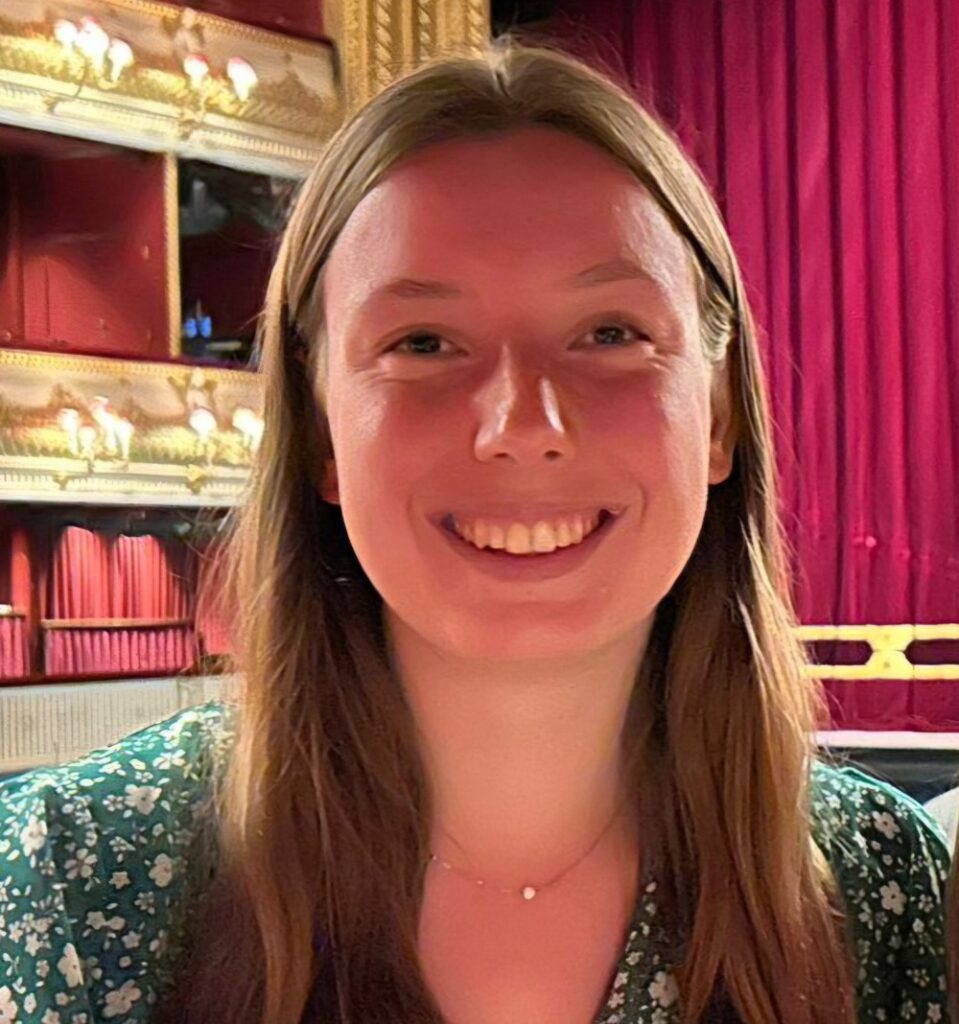
Grace Kimber
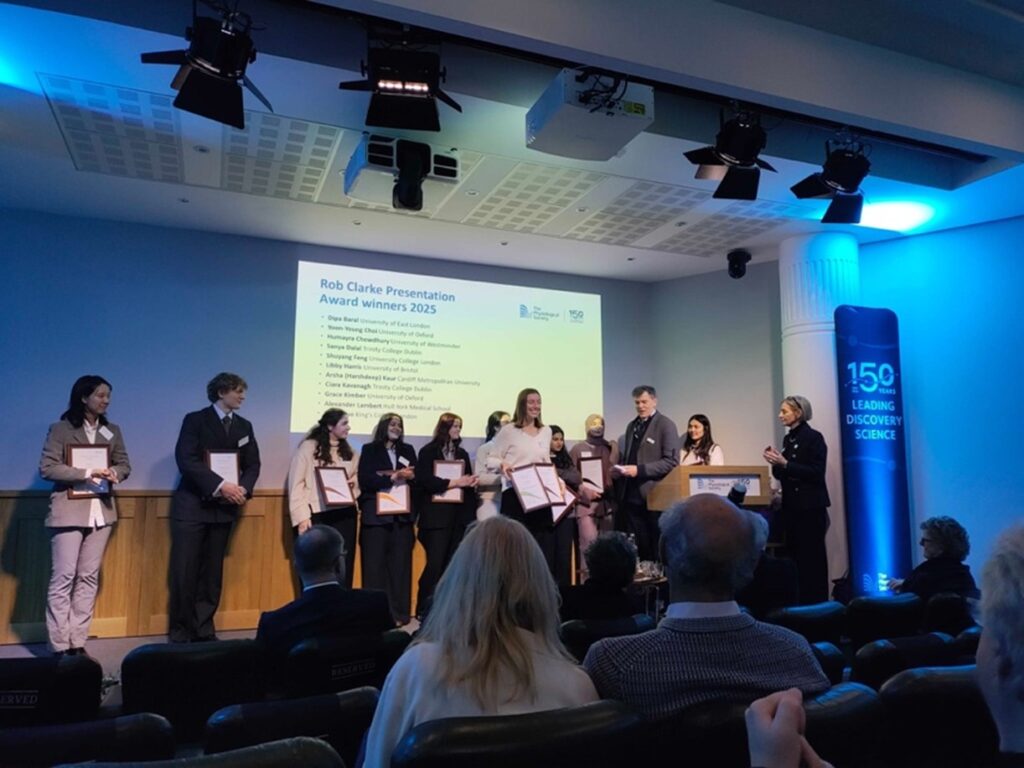
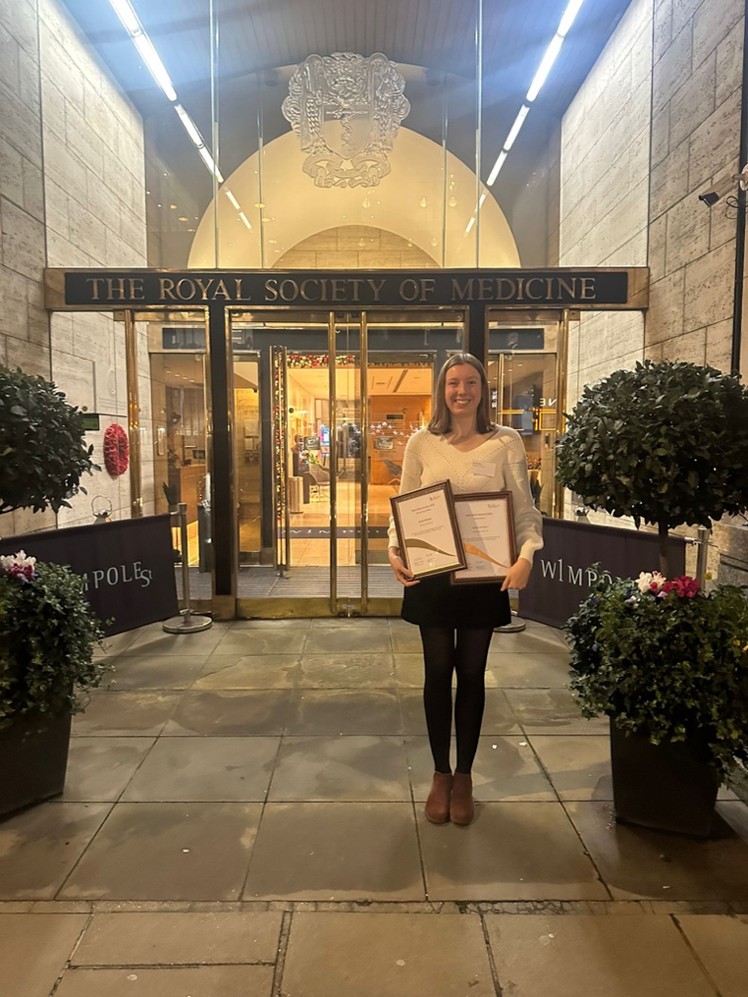
At the Member Forum held on 4 December 2025, Grace Kimber (University of Oxford, UK) was presented the Rob Clarke Presentation Award for her presentation and poster titled, ‘Investigating the impact of repetitive transcranial magnetic stimulation (TMS) on motor networks and behaviour in healthy humans’.
Grace is a fourth-year biomedical sciences student, specialising in neuroscience. In this Q&A, we learn more about Grace’s project, discussing brain stimulation, motor function and the impact of translational research.
What initially got you interested in biomedical sciences?
I was drawn to biomed because I enjoyed the integration of different scientific disciplines, and I wanted to understand the mechanisms underpinning medicine.
I think this is one of the reasons why I have especially enjoyed working in translational neuroscience in the later years of my degree. I enjoy learning how something works in health, then understanding how this could go wrong, before creating mechanistically informed treatments.
Another reason why I chose biomed was because it is so broad. Before I started, I thought that I would want to specialise in genetics but as I learnt more about neuroscience and physiology, I realised that this is where my interests really lie.
What topic did you choose for your project?
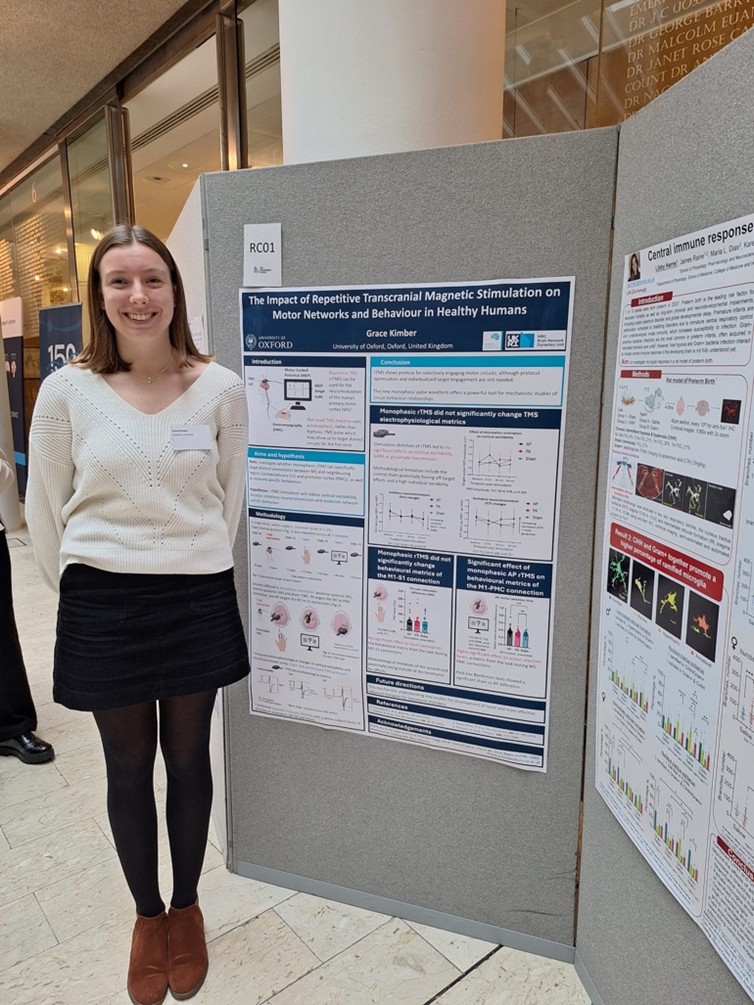
My project was titled ‘Investigating the impact of repetitive transcranial magnetic stimulation (TMS) on motor networks and behaviour in healthy humans’. TMS is a type of non-invasive brain stimulation technique that works by delivering a short and intense magnetic pulse.
In this study, we used TMS for two purposes: as an electrophysiological measure and as a neuromodulation technique. The neuromodulation involves stimulating the motor cortex with a type of repetitive protocol, called rTMS. Our rTMS intervention used a new pulse shape that delivered current in just one direction (monophasic stimulation), which may enable more selective targeting of motor pathways.
After conducting the study in 29 participants, I concluded that there is a potential for rTMS to selectively engage specific motor circuits. Protocol optimisation and individualised target engagement are needed before rTMS could be used in future mechanistic studies.
What inspired your interest in this?
I chose this project because I wanted to work on a human translational neuroscience project, and this was an up and running project that sounded really exciting. When I visited the lab, I was welcomed by an enthusiastic and friendly team. Their clear passion for the work they do, and their supportive environment really drew me in. I am especially grateful to my supervisors Dr Ioana Grigoras and Professor Charlotte Stagg.
What did you enjoy most about the project?
Besides presenting at the Member Forum, the highlight of this project for me was demonstrating TMS at New Scientist Live 2025 festival. I thoroughly enjoyed sharing my knowledge and inspiring the next generation of scientists.
What were the challenges?
The biggest challenge was recruiting healthy humans! Somewhat naively, I had never anticipated how hard it would be to recruit healthy people to have their brains stimulated on three occasions.
What was your experience of presenting your research?
I thoroughly enjoyed the poster presentation, it was an amazing experience and I came away buzzing. When I was presenting to the panel of judges, I felt like I was just discussing my project with someone who was genuinely interested in my work rather than being assessed. I was asked thoughtful and curious questions as the judges learnt more about my project and evaluated potential future research avenues. The day was also filled with stimulating conversations with the other Rob Clarke finalists, who kindly shared their inspiring projects.
What have you learnt from participating in the Rob Clarke Award?
My Rob Clarke project showed me the importance of driving innovation that could have an impact on patients’ health. More broadly, applying for the Rob Clarke Awards taught me that putting myself forward can lead to incredibly rewarding experiences, and that is something I will carry forward into the next stages of my career.
What are you currently working?
I am primarily working on my master’s project investigating the impact of brain stimulation on stroke motor recovery. I’m using magnetic resonance spectroscopy imaging (MRSI) to look at baseline neurochemicals in chronic stroke survivors, relating this to motor function, and then relating this to motor function improvement after transcranial alternating current stimulation (tACS) brain stimulation. This research could help us determine who is most likely to respond to this stimulation, and understand more about how neurochemicals relate to motor function in chronic stroke.
Alongside my master’s project, I’m working on a ‘Current Opinions’ style review looking at invasive vs non-invasive neuromodulation techniques to treat spinal cord injuries. I’m finding both projects fascinating!
What are your career plans?
I am in my final year at University of Oxford, so I’m exploring my options for what I’d like to do after I graduate this summer. I’m currently interested in working in the pharmaceutical or biotechnology sectors, although I am trying to gain experience through internships in a variety of roles to help figure out what I’d enjoy most.
One role that has recently caught my interest is medical writing/communications as I am keen to apply my scientific knowledge to real world applications and make a direct difference to patients.
For more interviews with our 2025 Rob Clarke Award Finalists, read the Q&As with runners-up Sanya Dalal and Alexander Lambert.