Features
Celebrating 45 years educating and counselling elite athletes on nutrition
Professor Louise Burke, Australian Catholic University, Australia
2026 recipient of the Society’s Joan Mott Prize Lecture Celebrating Women Physiologists
From the letter sharing nutrition insights to support her football team to the letters that kicked off a career at the Australian Institute of Sport, Professor Louise Burke’s determination to feed nutrition into elite sport led to her specialising in sports nutrition. A career that includes aiding the Australian Olympic teams as the team sports dietitian for six Summer Olympic Games from 1996-2012, and 2021.
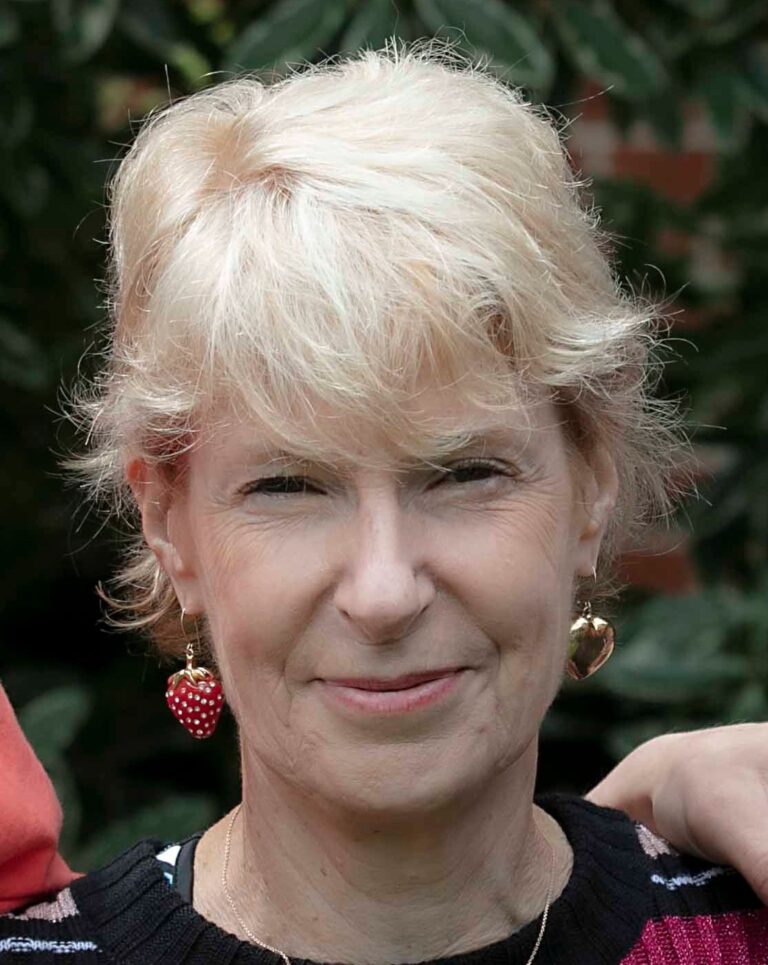
Louise Burke
Last week Louise presented her Prize Lecture ‘Sports Nutrition: Is it even a science? And how does it help us all?’ at our meeting, ‘Dietary Manipulations for Health and in the Prevention and Management of Disease 2026’. We invited Louise to take part in a Q&A to hear more about her work developing strategies to boost athletes’ health and performance, and the issues and themes she raised in her lecture.
What inspired your interest in sports nutrition and exercise metabolism? How did this lead to a career as a sports dietitian?
My desire to help my football team (Australian rules football) find that “winning edge” to be premiership champions within my lifetime sparked my first adventure in sports nutrition. I fell into studying nutrition by accident, because I was clueless about the best way to have a career in science when I started university. Focusing on nutritional sciences during my Bachelor of Science degree led to being offered a place in a post-graduate dietetics course without knowing what a dietitian did, and well before the specialisation in sports dietetics existed.
Awareness of how to connect nutrition with my passion for sport came through an accidental conversation with Professor Richard Read, the course coordinator of my PhD, who explained that his strange choice of lunch (lettuce and cheese) was part of a glycogen-depletion phase prior to carbohydrate loading for a marathon. This was shortly after a group of Scandinavian researchers had first published a paper on the benefits of this approach for long distance running. With it being a new concept, it wasn’t part of any course curriculum.
Following that conversation a lightbulb went off in my head, and I wrote to the best player in the professional football team that I followed to offer my (very naïve) insights into sports nutrition. Luckily for me, he passed my letter to the club doctor, who also indulged my eagerness to inject nutrition into the club program. Ten years later, my letters to the newly built Australian Institute of Sport led to a position for me to develop a Sports Nutrition Discipline within their sports science and medicine team.
What have been some of the highlights of your career?
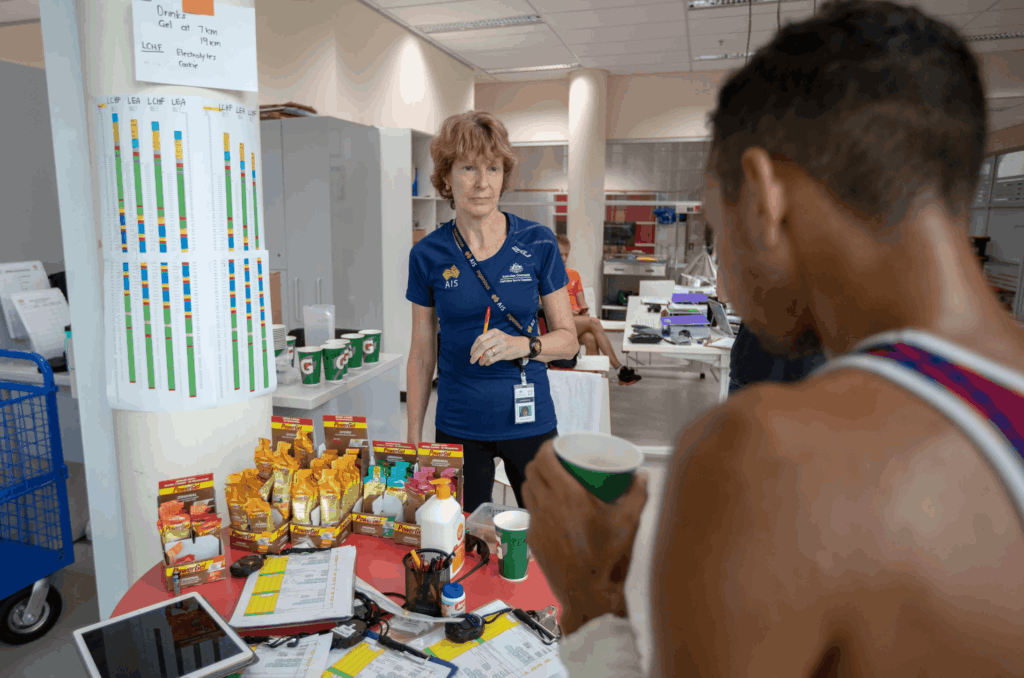
I have enjoyed a wonderful 30 year career at the Australian Institute of Sport, where I gradually built up a team of 17 sports and food service dietitians. Along the way I was privileged to work with some incredible athletes, coaches and fellow sports scientists to put nutrition in the strategies used to enhance athlete health and performance.
I’ve experienced the thrill of being part of personal bests, world records and podium places at World Championships and Olympic Games. Each of my six Olympic campaigns offered new opportunities for teamwork and scientific exploration, because new events, different athletes, specific conditions (e.g. heat, pollution, food cultures), and emerging science/technology all created challenges, even nuanced, that we could tackle with new sports nutrition knowledge and practice.
For me, the highlights come in many different forms, whether that is an athletic triumph, the completion of embedded Phd program, or watching the blossoming career of a young mentee.
What have been the challenges?
The biggest challenge is finding enough time to do all the things on your To Do List. But an interesting outcome is the change in my perception of my own career and role in sports nutrition. For most of the last 40 years, I have considered myself a practitioner who undertook research as a side-line, to find the evidence base to support this practice. But 350 papers later, and a recent move into academia as a full-time researcher, now makes me more appreciative of my skills and experience as a researcher.
You’ve just delivered your Prize Lecture ‘Sports Nutrition: Is it even a science? And how does it help us all?’. Could you share a few of the key points with us.
My key message explains and defends the science underpinning sports nutrition. In any field, there are examples of both rigorous and rubbish research which are predicated more by the approach than the topic. My lecture specifically addresses the criticisms levelled at the science of sports nutrition by the British Medical Journal during the London 2012 Olympic Games. I acknowledge where current weaknesses lie but also highlight the special requirements and expertise that do exist.
It is easy to consider research efforts supporting elite athletes to be faster, higher and stronger, to be a frivolous arm of science, but this research is also applied to improve community health. My lecture also demonstrates a novel protocol for sports nutrition research, the research embedded training camp, which has allowed elite athletes to co-design and participate in innovative research.
What has your career taught you?
My career has taught me that nothing you do is ever wasted, any knowledge, expertise and insights you gain become useful in different ways. I’ve also learnt that your career only makes sense in retrospect; even if a lot of it seemed random and based on luck as it was happening, hindsight makes it all seem logical and strategic.
What career advice would you like to share with aspiring physiologists?
My main point for anyone seeking a similar career is to be curious, and to value the science and its first principles in what you do. Our modern world is full of influencers and anecdata, or numbers and facts produced by gadgets and machines with overwhelming volume and confidence. There’s also an incentive to push envelopes or look innovative in promoting new strategies or products. However, it is important to always question the evidence and the basic science that is behind the scenes. Many things that look too good to be true are exactly that.