Membership
Award spotlight with Alexander Lambert (2025 joint Rob Clarke Award runner up)
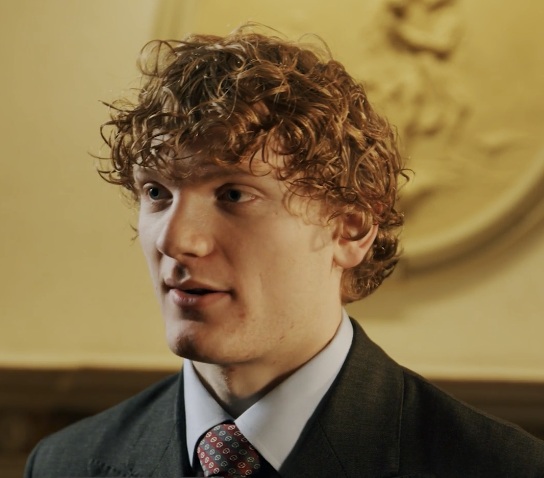
Alexander Lambert, Hull York Medical School at University of York, UK
“This project reinforced my belief that students can be effective at shaping medical education when given the right tools and support.”
Alexander Lambert
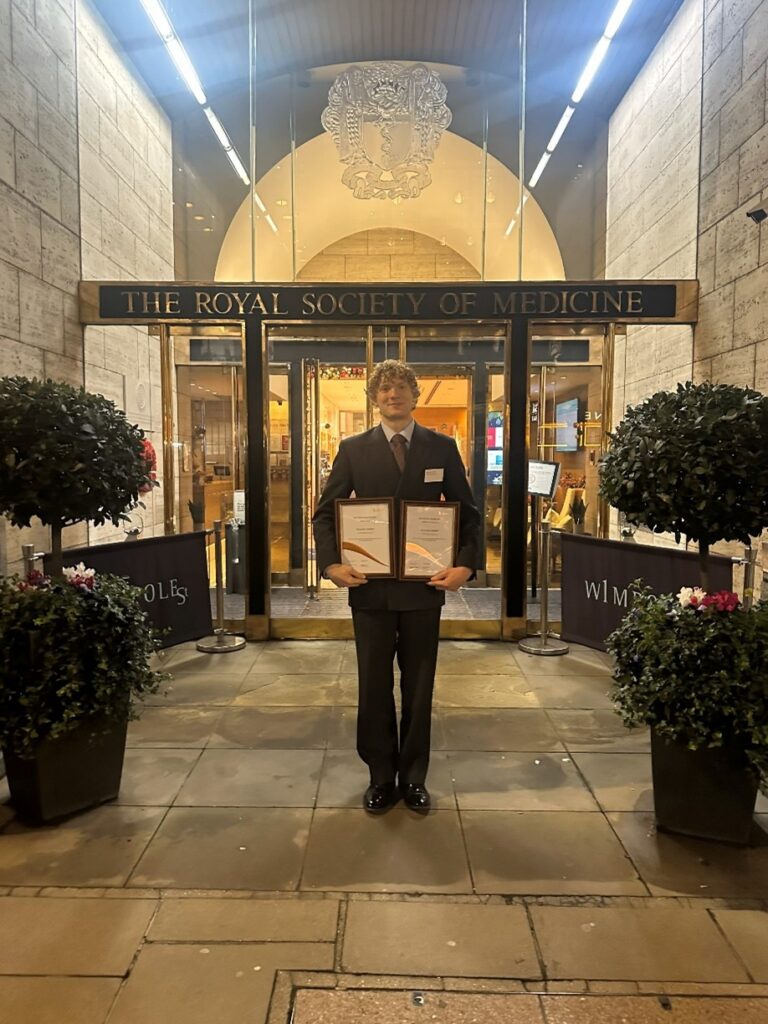
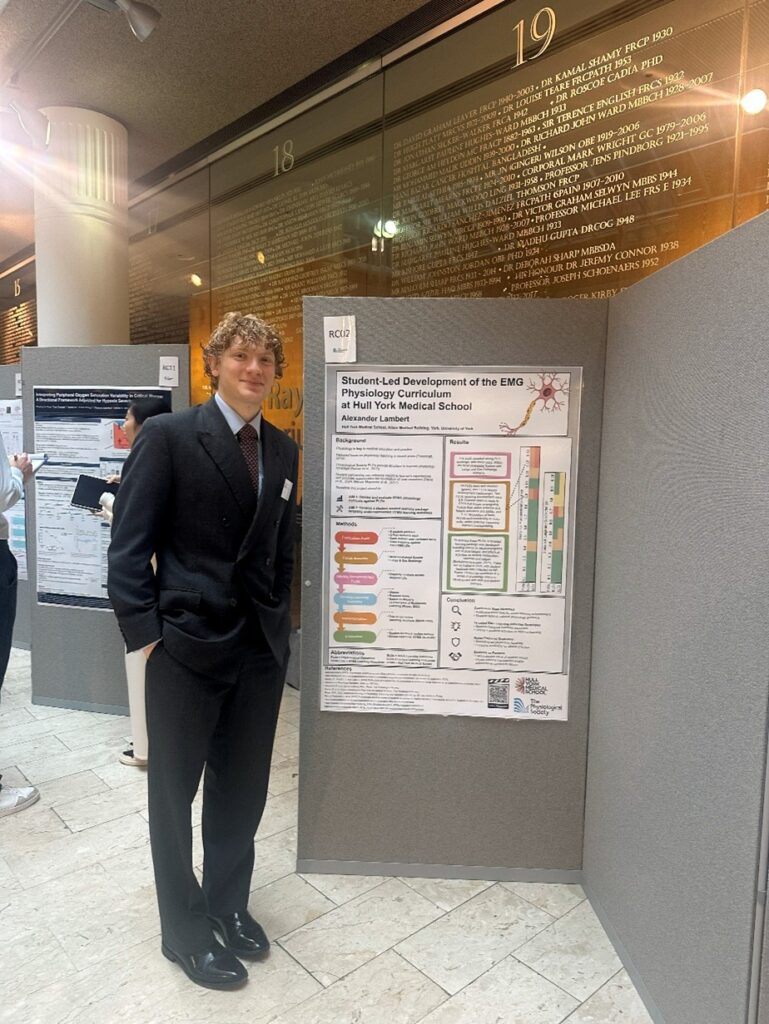
On 4 December 2025, Alexander Lambert presented his poster titled ‘Student-Led Development of the EMG Physiology Curriculum at Hull York Medical School’ at the final judging of the Rob Clarke Award at our Member Forum. Later that day, the judges presented Alexander, and finalist Sanya Dalal (Trinity College Dublin, Ireland), as the 2025 Rob Clarke Award joint runners-up. Since the excitement of the event, we followed up with Alexander to find out more about his studies, his chosen topic of interest for his research project, and how it felt presenting to a judging panel.
Alexander is a medical student at Hull York Medical School at University of York, UK, interested in public health, education and policy. Currently in his 4th year, he is undertaking an intercalation to study an MA Law conversion course at the University of Law.
He wanted to study medicine to apply physiology to clinical management to help patients improve following treatment. “As well as the important relationship between physiology and clinical medicine, it has shown me how important good physiology teaching is,” says Alexander. This inspired his Rob Clarke Award project, to explore how physiology is delivered within medical schools and how it might be strengthened to better support clinical reasoning.
In this Q&A, Alexander tells us more about his project on student-led teaching.
What topic did you choose for your project?
I examined the representation of physiology within the undergraduate medical curriculum at the Hull York Medical School, using the Physiological Society’s Objectives as a benchmark. The project then aimed to develop student-led teaching to address any knowledge gaps.
What inspired your interest in this?
During my medical training, I have felt that some physiological concepts, particularly in areas such as musculoskeletal and respiratory physiology, were often assumed rather than explicitly taught. Importantly, the project would not have got off the ground without the excellent and insightful supervision of Dr Paul McKeegan.
Any challenges or highlights you’d like to share?
One of the main challenges was fully representing the curriculum to ensure the mapping was rigorous and fair. Not having access to examination materials was a significant limitation but this was unavoidable given the policy surrounding academic integrity.
My highlight was developing the learning materials to deploy within the curriculum. This gave me a much-needed revision session of some of the core physiology. It was great to step into the shoes of an educator whilst still being a student. I believe using this student-as-partners approach is invaluable in education.
What was your experience of presenting your research?
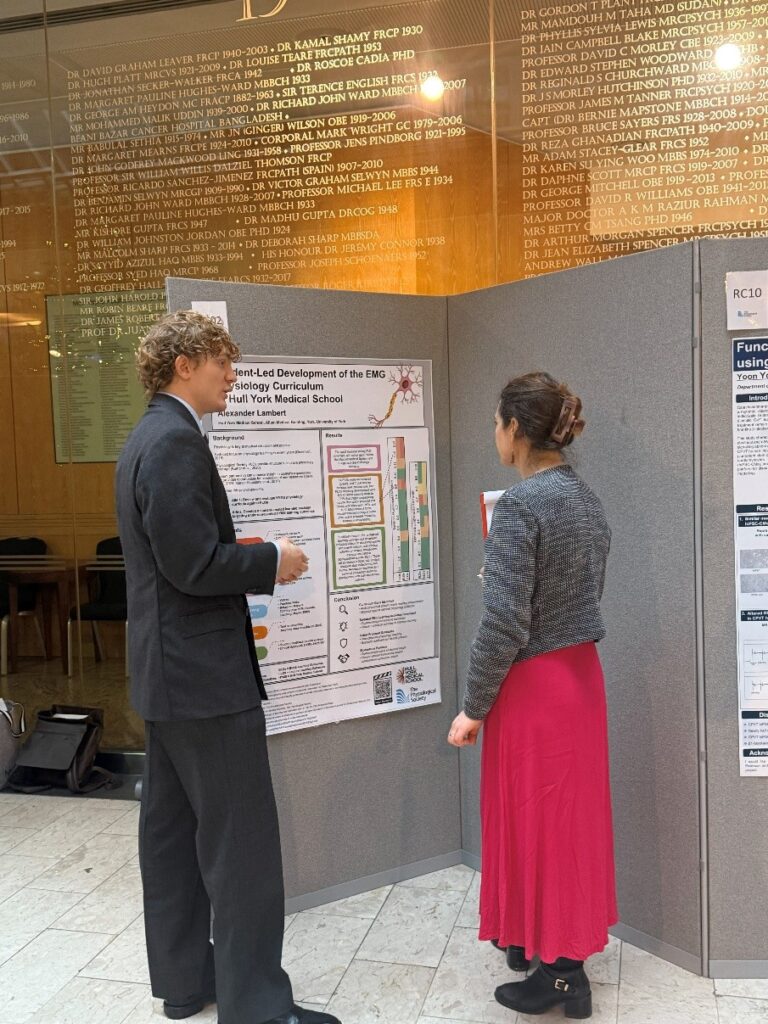
It would be an understatement to say that I was nervous leading up to the poster presentation. However, the judges soon put me at ease, explaining the process as more of a conversation about the research. It was encouraging to discuss my research in this way with experts who were genuinely interested in the educational impact rather than just the results themselves. It was great to receive questions from the judges who were not only physiologists but educators as well. This enabled valuable reflection on the wider policy regarding the students-as-partners approach as well as how to test any output from the project on a student level.
What are you working on now?
As well as studying for my MA Law Conversion course, I am currently working on delivering an in-person teaching session focused on muscle physiology. The session has been designed in response to gaps identified during my Rob Clarke Award project and aims to consolidate core physiological principles in a clinically relevant way.
Alongside teaching, I am collecting evaluative data using a pre-session knowledge check and a post-session knowledge check. This will allow me to assess changes in understanding and explore the effectiveness of targeted, physiology-led teaching interventions. The project builds directly on my earlier curriculum mapping work and represents a move from identifying educational gaps to addressing them through teaching and evaluation.
Has the project influenced your future interests?
Absolutely. This project reinforced my belief that students can be effective at shaping medical education when given the right tools and support. It has strengthened my interest in physiology education and curriculum evaluation, and it has encouraged me to pursue further work in this area. More broadly, it highlighted the value of stepping back from simply learning content to critically examine how and why we are taught in certain ways. That perspective is something I hope to carry forward into my future career, both as a clinician and as an educator.
Read our news article to meet all 2025 Rob Clarke Awards finalists who presented their posters at The Royal Society of Medicine, London, UK