Membership
Why I applied for an Institutional Engagement Award
Joern Steinert, University of Nottingham (UK)
Dr Joern Steinert is an Assistant Professor in Neuroscience at the University of Nottingham, specialising in systems neuroscience, redox signalling, neuroinflammation and synaptic dysfunction. He received his Diploma in Biophysics from the Humboldt University Berlin and PhD in Vascular Biology at King’s College London. His research integrates advanced electrophysiology, opto and chemogenetics and live-cell imaging to uncover how oxidative and metabolic stress shape neuronal physiology using Drosophila and mammalian models.
Dr Steinert has led internationally funded research, including awards from the Royal Society, BBSRC, MRC and Rosetrees Trust. He is an Associate Editor for multiple journals, a Fellow Member of The Physiological Society, BNA Local Group Representative (LGR) and Fellow of the Higher Education Academy (FHEA). He is involved in numerous international collaborations, including Istanbul Medipol University and Luxembourg Centre for Systems Biomedicine supporting multidisciplinary approaches to understanding neurodegenerative disease mechanisms and redox biology. Dr Steinert has organised international symposia across international meetings, such as The Physiological Society, SFRR-E and FENS meetings.

Joern Steinert
Member Joern Steinert was a 2025 Institutional Engagement Award recipient. We followed up with Joern to find out more about the event he led together with colleagues to gather neuroscientists across Nottingham with support of the Physiological Society’s grant.
Neuroscience@Nottingham Day 2025 was held on 9 January 2025 and brought together more than 150 researchers, clinicians, and postgraduate scholars from the University of Nottingham, Nottingham Trent University, and, for the first time, colleagues from De Montfort University Leicester. The event represented the second jointly organised gathering led by Joern Steinert and Graham Sheridan (University of Nottingham) in collaboration with Kamal Gadalla and Aslihan Ugun‑Klüsek (Nottingham Trent University). The meeting’s primary aim was to strengthen collaborative neuroscience research across institutions, showcase ongoing work, and support early‑career researchers through formal presentations, networking activities, and poster discussions.
Cross-disciplinary and cross-institutional collaboration
The scientific programme was structured around a series of short talks delivered by both emerging junior and established neuroscientists. Eleven presentations were scheduled across morning and afternoon sessions, covering a broad array of sub‑disciplines including molecular and cellular neuroscience, neurophysiology, systems-level investigation, cognitive and behavioural neuroscience, and translational and clinical research. These sessions were interspersed with structured breaks, allowing participants to continue scientific discussions informally and initiate potential collaborations.
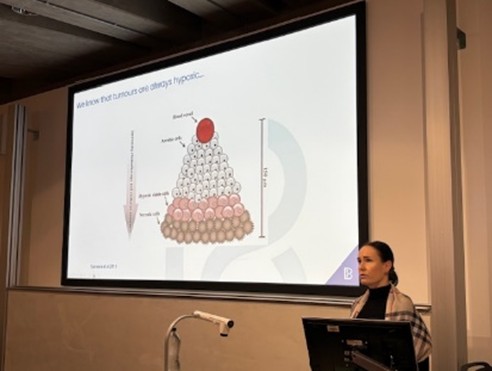
This year’s event was distinguished by three invited keynote speakers whose contributions significantly elevated the academic profile of the meeting. Professor Nikita Gamper (University of Leeds) delivered an in‑depth keynote on current advances in sensory and pain neuroscience. Professor Tom Wishart (Nottingham Trent University and The Roslin Institute, University of Edinburgh) provided a systems‑level perspective on molecular anatomy and its application to neurodegeneration research. Dr Krista Rantanen (The Francis Crick Institute and Baker Ruskinn) presented recent developments in cellular systems engineering and its impact on understanding oxygen-dependent signaling under physiological normoxia conditions termed physioxia. Their keynote lectures provided intellectual anchors for the day, setting the thematic tone for the broader programme.
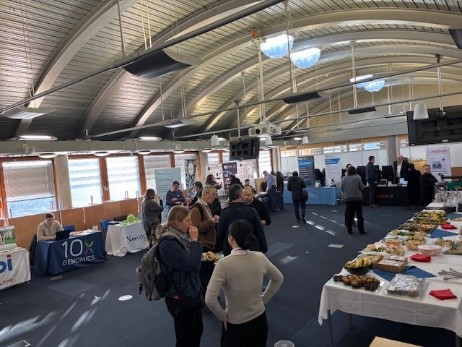
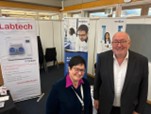
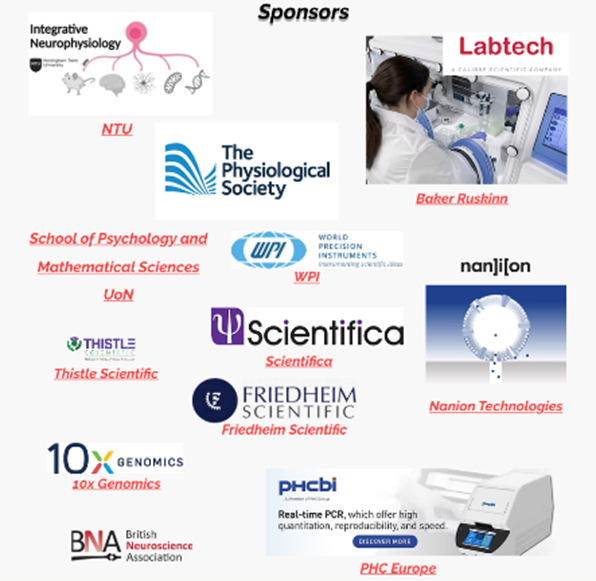
The meeting also benefitted from substantial sponsor engagement, with more than thirteen sponsoring organisations contributing financial support amounting to over £6,600. These contributions fully covered operational costs and enabled the inclusion of several five‑minute sponsor presentations, designed to highlight emerging technologies, research tools, and commercial developments relevant to neuroscience. Additional support from the Physiological Society, the British Neuroscience Association, and academic schools within the University of Nottingham further strengthened the event’s infrastructure and visibility.
Prizes in science communication
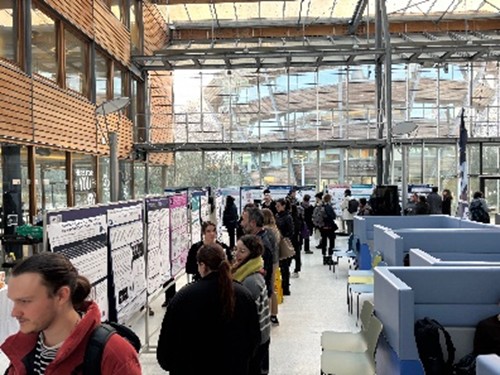
A central element of Neuroscience@Nottingham Day 2025 was the poster session, which featured thirty‑four research posters spanning molecular mechanisms, cellular modelling, computational neuroscience, behavioural sciences, and clinical‑oriented projects. Poster presenters included postgraduate students, postdoctoral researchers, and technical specialists. To recognise excellence in scientific communication, three postgraduate research prizes (£50, £30, and £20) were awarded based on committee evaluation. A separate public‑vote prize, sponsored by StemCell Technologies, further highlighted the breadth of interest and engagement across the full attending community.
The event strongly emphasised cross‑disciplinary and cross‑institutional collaboration. Participants from Nottingham Trent University and the University of Nottingham showcased numerous joint initiatives, with several presentations demonstrating integrative approaches combining neuroscience, psychology, mathematics, biophysics, and biomedical engineering. The meeting successfully fostered discussions on upcoming grant applications, shared facilities, and new opportunities for postgraduate training.
Neuroscience community showcase
The 2025 Neuroscience@Nottingham Day continued to demonstrate the strength and growing cohesion of the regional neuroscience community, reinforcing Nottingham’s position as a centre of excellence in both fundamental and translational brain research. The organisers extend their gratitude to all speakers, poster presenters, sponsors, volunteers, and attendees whose contributions ensured a highly successful and scientifically stimulating event. Further details, including programme information and updates, can be found on the Neuroscience@Nottingham website.
For members and Society Representatives seeking to host an event at your organisation, whether that’s an internal conference, teaching symposium, seminar or outreach event, you can now apply for the Institutional Engagement Award.