Introduction
By Alanna Orpen, Senior Media and Communications Officer, The Physiological Society
Physiology News is your magazine, here to showcase your voices. We want you, our members, to be involved in shaping and contributing to this magazine. Maybe you’d like to share how you won your first grant? Wish to showcase your facility or department? Tell us about your typical day working in your discipline/field, or possibly overcoming epic fails in the lab? Please do share any suggestions or your story ideas with the Physiology News Advisory Group at comms@physoc.org.
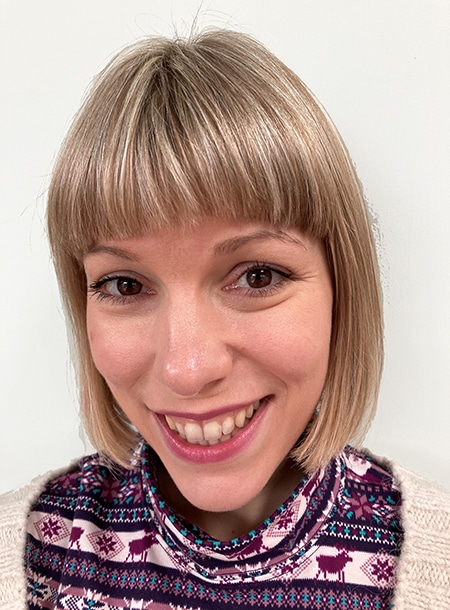
Alanna Orpen
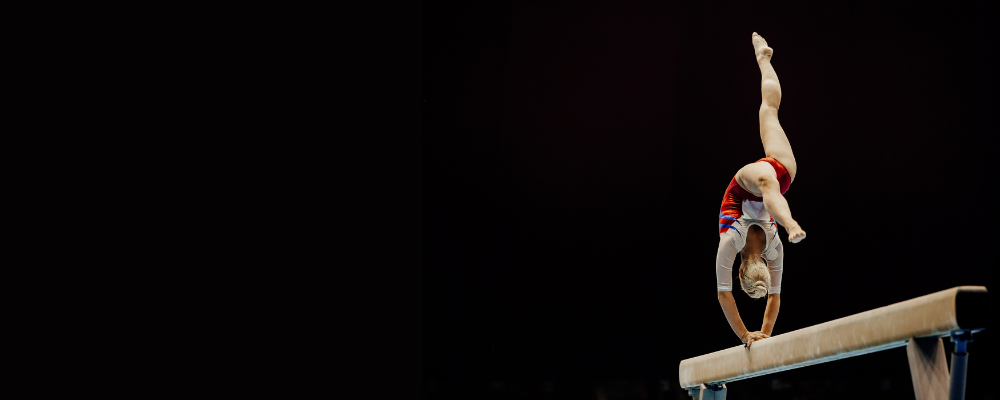
Leaping from the floor, spine arched into a C curve. The back leg bent so a pointed foot is a fraction from the head, neatly framed between two ringed arms. The front leg extended, revealing the tensed muscle to achieve a 180° split. As I write this Editorial, I’m looking at a photo of me when I was nine years old. Footage of the routines competed at the 2026 British Gymnastics Championships brought on a wave of nostalgia and I sought out an old copy of British Gymnastics magazine, where this photo of me doing a Ring Leap serves as the backdrop for the British Age Group Championships results page, in which I was one of the competitors. An elite artistic gymnast dreaming of competing on the world stage, already training over 20 hours a week. The discipline and dedication captured of a young athlete suspended in time and space, unbeknownst of what lay ahead of her competitive future.
I grew up in the gymnastics arena, undergoing strength, cardio and flexibility training to learn the technical and specialist requirements to perform on the four apparatus: bars, beam, floor and vault. Each required different abilities to master them. From swinging giants around the bar, to the balance needed to stick aerial skills on a four-inch-wide beam, the speed and power to fly onto and off the vault, and executing complex tumbles with twisting somersaults into a dance routine on the floor.
Every training session included a strenuous conditioning circuit and deep stretch. Siting in a deep V split with our front and back legs raised on box tops, my coach would quote, “When the going gets tough, the tough get going”, along with “No pain, no gain” to motivate the team to push our body to the limits. It was only by training through difficulty, that we would improve our artistry in the sport, aiming to excel in strength, power, flexibility and grace.
Gymnastics is the extreme challenge I chose for myself. I enjoyed testing myself and seeing what my body was capable of. But what of the environments and conditions we find ourselves in, such as extreme heat, air pollution or floods brought on by climate change, that put strain and pressure on the body? In this special issue on extreme physiology, we consider these scenarios, and how the human body can respond, adapt and thrive under pressure in different environments and conditions.
Our journal Editors-in-Chief demonstrate the breadth of extreme physiology in their columns. Read about diving, space, exercise, nutrition and human performance, and heatwaves and wildfires. Policy Focus discusses physiological resilience, and explains the importance of understanding physiological thresholds and limits to inform climate change and health policies.
The inspirational Professor Louise Burke, our 2026 Prize Lecture recipient, shares her determination to feed nutrition into elite sports, which led to working with the Australian teams at six summer Olympic Games. Read her career story, advice and a summary of her Prize Lecture delivered at our ‘Dietary Manipulations’ meeting.
We then take our sights to the stars in our interview with Dr Irene Di Giulio on physiological adaptations to spaceflight. Irene’s aerospace research led her to question the necessity of lower limbs for manoeuvring around the International Space Station. By exploring whether individuals with physical impairments could be better suited to spaceflight, Irene and her team in space physiology set new hopes for astronauts with physical disabilities.
New hopefuls and their aspirations fill our membership pages. We interviewed the Rob Clarke Award winner and runners-ups to hear more about the research projects they presented at our Member Forum in December 2025. In our event news, we present the early career researcher prize winners announced at this month’s two-day meetings. Meet the physiologists dedicated to improving health, whether through nutrition and metabolic physiology, or working on new therapies to tackle cardiometabolic disease, or earlier diagnosis for chronic liver disease. For opportunities to showcase your research and network, view our handy events calendar for all those important dates for your diary.
After making my debut at the British Championships (Juniors) at 13, my back wailed out in protest of the extreme physiological demands I asked of it. I got stabbing pain in my sacroiliac joint whenever I moved, let alone running, jumping and tumbling on it. Treatment helped me get over the worst of the pain, but it became a chronic injury, and my back could no longer tolerate the intensity and impact of the acrobatic skills. My gymnastics dream ended when I was 16, retiring due to injury from the sport I loved.
For a more positive life-changing experience, Ahmed Abdelkarim Romana, a medical student at Al-Quds University, Palestine, reflects on securing an internship at a top neuroscience department. Share in his excitement for the skills he’ll teach and grow back home to aid the growth of scientific culture in Palestine.
If you are considering whether to accept that invitation to serve as a reviewer, gain advice and motivation with Dr Kate Thomas (University of Otago, New Zealand). Kate was shortlisted as an exceptional referee for two of our Society journals, The Journal of Physiology and Experimental Physiology. Kate shares her insights into the peer review process, discussing its values and flaws.
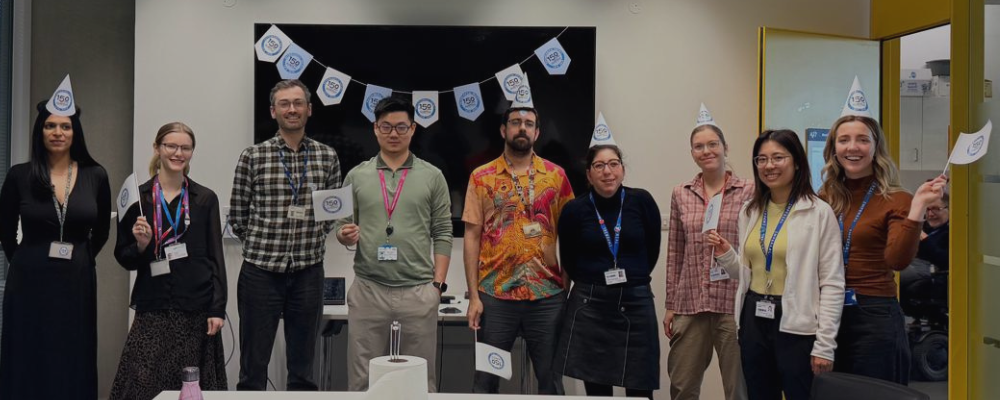
A sporting career tends to be one full of setbacks to overcome. In the academic world, researchers can face similar disappointments, from failed experiments, rejected manuscripts and funding cuts. Hopefully, you can find the advice you need within our member community. The joy of this resilient and thriving network is showcased in our ‘Birthday bunting and party hats’ news article.
Enjoy the issue!